
News Summary
Birmingham, renowned for its rich cultural tapestry, once boasted a remarkable floral clock that captivated both locals and visitors for over thirty years. Installed in 1963 in the Birmingham Botanical Gardens, this stunning timepiece was adorned with 5,000 flowers and stood as a symbol of community spirit and creativity. Although the clock was removed in 1995 due to deteriorating mechanics, its legacy continues to inspire cities like Fairhope, Alabama, which installed a similar floral clock in 2013. This article delves into the history and impact of Birmingham’s floral clock.
Birmingham’s Floral Clock: A Blossoming History
Ah, Birmingham! Known for its rich history and vibrant culture, this charming city also harbors a tale of a unique timepiece that blossomed brightly for over three decades. Yes, we’re talking about the enchanting floral clock that found its home in the renowned Birmingham Botanical Gardens.
A Stunning Addition
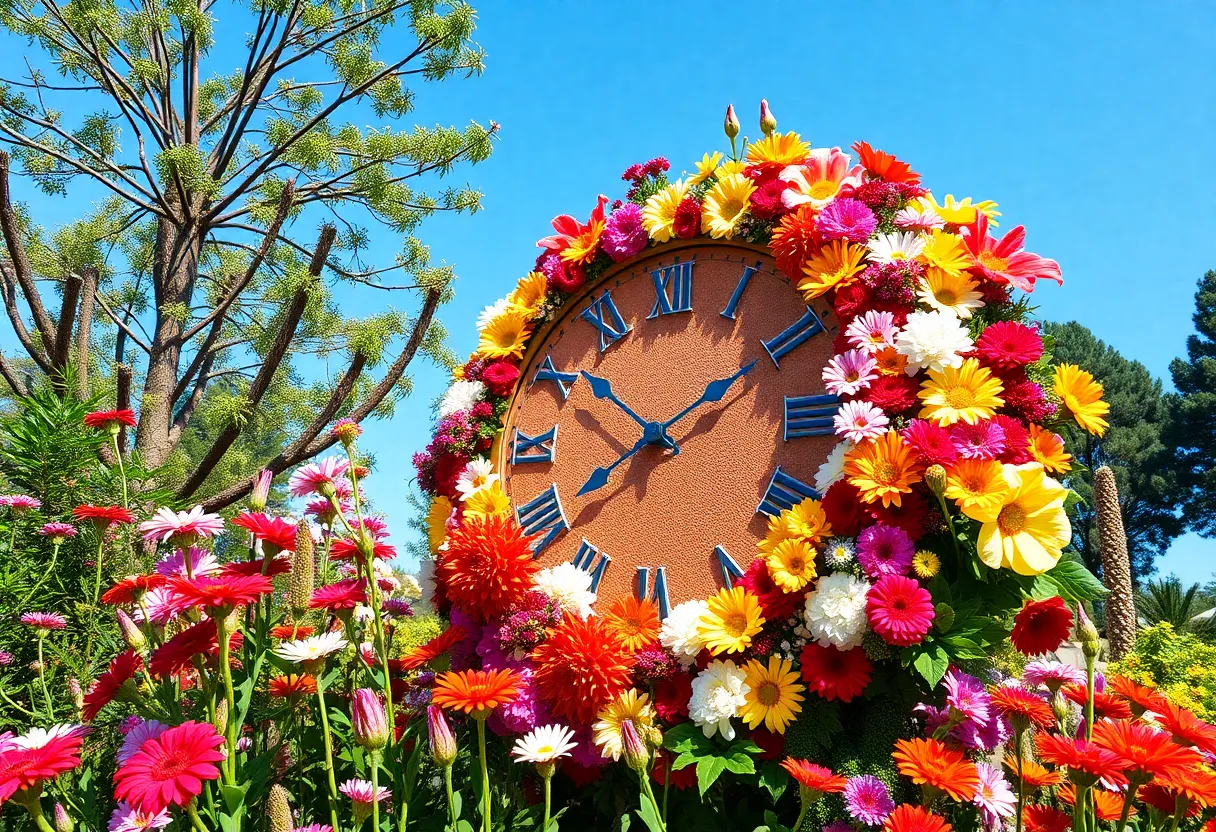
Back in 1963, shortly after the official opening of the gardens, Birmingham welcomed a spectacular new attraction: a working floral clock. Modeled after a similar clock in Canada, this masterpiece was the very first of its kind in the United States. It made a splash in the community with its grand dimensions of 26 by 36 feet, quickly becoming a must-see for both locals and visitors alike. This ambitious project was made possible thanks to the generosity of local philanthropist Catherine Hammond, whose vision for a vibrant landmark came to life in front of the garden’s conservatory.
Timekeeping with a Twist
The conservatory itself opened its doors to the public in December 1962, following construction that began in September of the same year. As visitors strolled around, there it was—a dazzling floral clock featuring a remarkable design where the face was adorned with 5,000 flowers. Standing proudly with a minute hand stretching a charming 12 feet long, the clock became a captivating conversation piece and an icon of the botanical gardens.
The Talk of the Town
Before long, the floral clock was not just a timekeeper but a beloved attraction. Within months of its unveiling, it was highlighted by local media, noted for being “worth a visit to the Botanical Gardens just to see the clock itself.” Most was it a sight to behold, but it also served a practical purpose – showcasing the beauty of seasonal floral arrangements that changed throughout the year.
Maintenance Behind the Scenes
Retaining this floral wonder required dedicated attention. Underground clockworks were cleverly hidden away in a small cement building, ensuring that the clock remained functional while the flowers above flourished. In 1963, former Birmingham Mayor Jimmy Morgan confirmed that the entire endeavor cost around $15,000, a price well worth the joy the clock brought to the community.
Time Runs Out
Though the floral clock stood as a prominent symbol of the Birmingham Botanical Gardens for many years, its charm began to fade as time took its toll. By 1995, deteriorating internal mechanics led to its removal—leaving a void in the gardens that many felt was hard to fill. It was a bittersweet retirement for a beloved landmark that had watched over the gardens for over three decades.
A Floral Resurgence
Fast forward to 2013, and another floral clock graced a different city. Fairhope, Alabama, took a page from Birmingham’s book by installing a stunning 30-foot floral clock at a notable intersection to welcome visitors. The cost was divided between the city and the Eastern Shore Art Association’s Committee on Public Art. This new floral creation was not just a pretty face—it also inspired visions of community engagement and creative expression, with the Committee contributing $17,000 for design and mechanisms, while the city assumed responsibility for annual maintenance costs of around $13,000.
In Summary
While the iconic floral clock in Birmingham may have ticked its last, the legacy it left behind continues to bloom in the hearts of many. It served as a symbol of the city’s charm and a reminder of the creativity and generosity that can beautify public spaces.
As we reminisce about the floral clock’s journey through time, we are reminded that every bloom eventually fades, but the memories created are timeless. Here’s to the flowers that filled our days with color and the moments they helped us cherish.
Deeper Dive: News & Info About This Topic
HERE Resources
Additional Resources
- AL.com: Vintage Photos of the Floral Clock
- Wikipedia: Birmingham Botanical Gardens
- IFL Science: Rare Plant Blooms
- Google Search: Floral Clock Birmingham
- Southern Living: Fast Growing Flowers
- Encyclopedia Britannica: Floral Clock
- AL.com: Iconic Alabama Things
- Google News: Floral Clock Alabama
- AL.com: Styx River Water World
- Google Scholar: Floral Clock Birmingham
- Treksplorer: Things to Do in Birmingham


Author: STAFF HERE BIRMINGHAM WRITER
The BIRMINGHAM STAFF WRITER represents the experienced team at HEREBirmingham.com, your go-to source for actionable local news and information in Birmingham, Jefferson County, and beyond. Specializing in "news you can use," we cover essential topics like product reviews for personal and business needs, local business directories, politics, real estate trends, neighborhood insights, and state news affecting the area—with deep expertise drawn from years of dedicated reporting and strong community input, including local press releases and business updates. We deliver top reporting on high-value events such as the Sidewalk Film Festival, Sloss Music & Arts Festival, Magic City Classic, and civil rights commemorations. Our coverage extends to key organizations like the Birmingham Business Alliance and the Birmingham Civil Rights Institute, plus leading businesses in healthcare, finance, and manufacturing that power the local economy such as UAB Medicine, Regions Bank, and Encompass Health. As part of the broader HERE network, including HEREHuntsville.com, we provide comprehensive, credible insights into Alabama's dynamic landscape.