
Birmingham, Alabama, July 30, 2025
News Summary
The average price of beef has surged to $6.10 per pound, driven by supply shortages and inflationary pressures, impacting consumers amid rising living costs. The cattle supply is at its lowest level in over a decade, leading to heightened demand. Industry experts warn that current high prices may persist for several years, urging consumers to consider budget-friendly meat purchasing strategies.
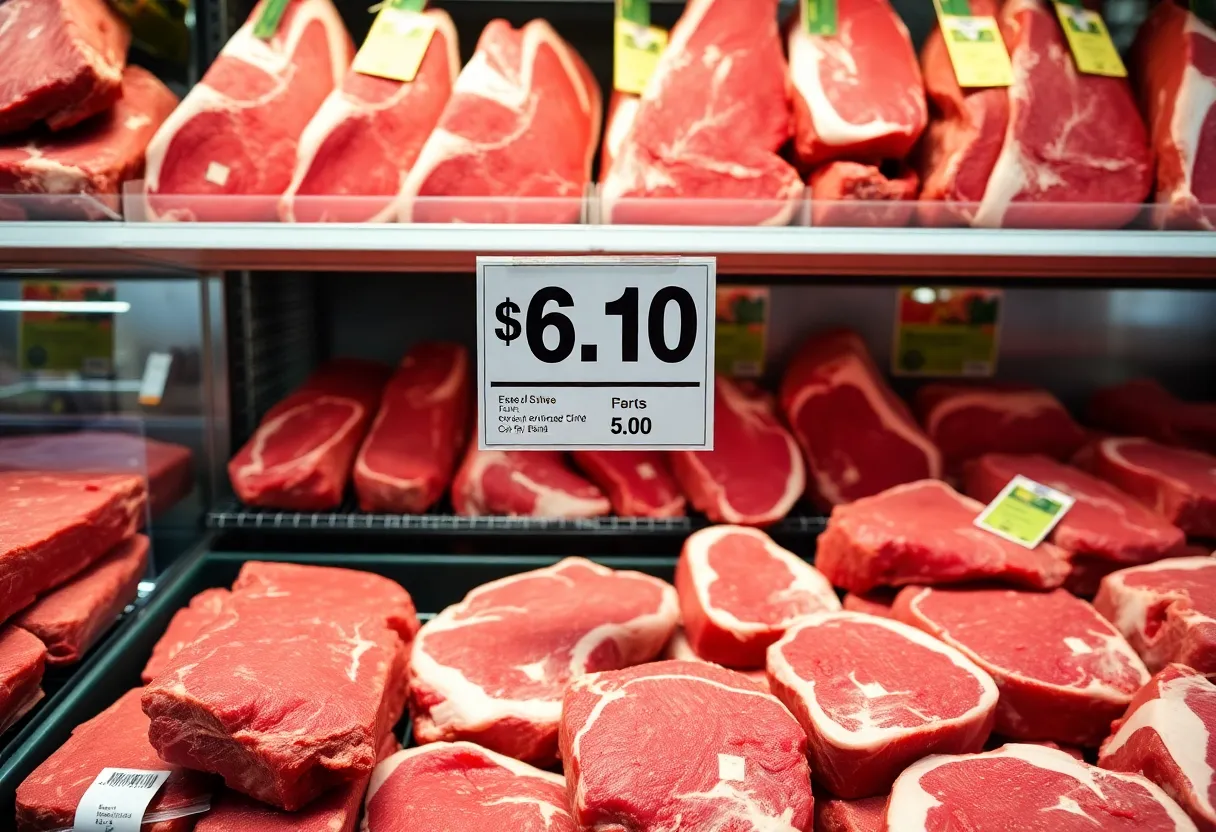
Birmingham, Alabama – The average price of beef has surged to $6.10 per pound, a notable increase attributed to supply shortages and ongoing inflationary pressures, according to the U.S. Bureau of Labor Statistics. This rise marks a significant concern for consumers as they navigate escalating living costs.
A primary factor contributing to the spike in beef prices is the tightening cattle supply, which is currently at its lowest level in over a decade. High demand for beef remains a pressing issue as consumers continue to seek out meat products, despite the financial implications. Inflation factors, particularly those affecting farm input costs, are further compounding this situation.
At the retail level, the impact of rising beef prices is being felt across all types of meat, including pork and chicken. A general manager at a local butcher shop noted that for the past five years, prices for meat have consistently increased, with an undeniable jump observed since the onset of the pandemic. Production lines faced interruptions during this period, resulting in fewer products reaching the market and further exacerbating price difficulties.
As supply chain challenges continue to persist, there are concerns that some less profitable meat products may never return to market if production remains curtailed. Industry experts predict that while a potential turnaround in cattle supply and a stabilization of beef prices may occur in the next 12 to 18 months, consumers should not expect immediate relief. Following the peak grilling season, prices may plateaux or decrease slightly, but significant price reductions could take several years, according to industry analyses.
Moreover, the current state is characterized by increased demand alongside the lowest number of cattle since the 1950s, contributing to sustained high beef prices. Industry professionals also predict that the most inflated meat prices might still be on the horizon, with projections indicating that the market may remain tight for up to five additional years, depending on various market conditions.
This situation has led to recommendations for consumers on how to manage their meat purchases effectively. Strategies include seeking out value cuts or opting to buy beef directly from local farmers, which may provide better pricing opportunities and support local agriculture.
Background Context
The rising cost of beef is not a new phenomenon, with consumers experiencing increases for several consecutive years. The production challenges faced during the COVID-19 pandemic have had a long-lasting impact, leading to a significant bottleneck in supply chains and overall market availability. Even as the economy rebounds, the impact of these lost production capabilities continues to ripple through market dynamics, leaving consumers to adapt to rising costs.
Experts continue to monitor the cattle market and supply levels closely, emphasizing the need for consumers to stay informed about food prices and making smarter purchasing decisions as the market evolves.
FAQ
What is the current average price of beef?
The current average price of beef is $6.10 per pound.
Why are beef prices increasing?
Beef prices are increasing due to the tight cattle supply, high consumer demand, and inflationary pressures affecting farm input costs.
How long might the high prices last?
Experts predict that while a slight turnaround in prices and supply may be seen in 12 to 18 months, significant price reductions might take several years.
What can consumers do to manage meat costs?
Consumers are advised to look for value cuts or purchase directly from farmers to manage costs more effectively.
Key Features of Current Beef Market
| Factor | Details |
|---|---|
| Average Price of Beef | $6.10 per pound |
| Current Cattle Supply | Lowest in over a decade |
| Market Demand | High consumer demand for beef |
| Inflation Impact | Increased costs for farm inputs |
| Price Stability Predictions | Expected stabilization in 12 to 18 months |
| Duration of High Prices | Market may remain tight for up to 5 years |
Deeper Dive: News & Info About This Topic
HERE Resources
Birmingham Billboard Sparks Controversy Over Trump-Epstein Link
Additional Resources
- WBRC: Why Beef is Going Up in Price
- USA Today: Inflation and Beef Prices
- CBS 42: Alabama Farmers See Benefits from High Beef Prices
- Economist Writing Everyday: Great Dinner Options in the US
- Free Press: Easter Brunch Dining Options


Author: STAFF HERE BIRMINGHAM WRITER
The BIRMINGHAM STAFF WRITER represents the experienced team at HEREBirmingham.com, your go-to source for actionable local news and information in Birmingham, Jefferson County, and beyond. Specializing in "news you can use," we cover essential topics like product reviews for personal and business needs, local business directories, politics, real estate trends, neighborhood insights, and state news affecting the area—with deep expertise drawn from years of dedicated reporting and strong community input, including local press releases and business updates. We deliver top reporting on high-value events such as the Sidewalk Film Festival, Sloss Music & Arts Festival, Magic City Classic, and civil rights commemorations. Our coverage extends to key organizations like the Birmingham Business Alliance and the Birmingham Civil Rights Institute, plus leading businesses in healthcare, finance, and manufacturing that power the local economy such as UAB Medicine, Regions Bank, and Encompass Health. As part of the broader HERE network, including HEREHuntsville.com, we provide comprehensive, credible insights into Alabama's dynamic landscape.