
Birmingham, January 5, 2026
Birmingham has successfully transformed an infrastructural need into City Walk BHAM, a vibrant public space offering community amenities. However, the project now confronts funding challenges that threaten its long-term viability. Local leaders now face critical decisions regarding sustainable financing to ensure this significant community asset continues to thrive.
Birmingham
Birmingham’s Visionary City Walk Faces Pivotal Funding Crossroads
In a testament to civic ingenuity, Birmingham has transformed an infrastructural necessity into a vibrant community asset. However, the long-term sustainability of this ambitious project now stands at a critical juncture, calling for robust local leadership and innovative funding solutions.
Birmingham, Alabama, has consistently demonstrated a spirit of resilience and forward-thinking, especially in converting urban challenges into opportunities for growth. The city’s recent history is marked by a commendable drive towards enhancing public spaces and fostering community engagement. A prime example of this proactive approach is the creation of City Walk BHAM, a remarkable public space born from a significant state-level infrastructure project. This initiative underscores the potential for local communities, through personal initiative and collaboration, to redefine urban landscapes beyond mere functionality, creating areas that truly serve and connect their residents. As Birmingham continues to grow and innovate, the success of such projects often hinges on responsive leadership and the ability to navigate administrative complexities to sustain communal assets for the long run. The development of City Walk BHAM exemplifies this dynamic, showcasing how strategic vision can lead to significant civic innovation.
The Genesis of an Urban Transformation
The genesis of City Walk BHAM is rooted in the practical necessity of modernizing vital infrastructure. In 2016, the useful life of the Interstate 59/20 highway in downtown Birmingham had expired, necessitating a major reconstruction project by the Alabama Department of Transportation (ALDOT). This critical undertaking, however, became more than just a roadway replacement; it sparked an ingenious idea for urban revitalization. Recognizing the potential within the underutilized space beneath the elevated highway, local visionaries and community leaders saw an opportunity to heal historical divisions caused by the original interstate construction in the 1960s, which had deliberately carved through a thriving neighborhood.
This foresight led to a comprehensive placemaking effort, initially spearheaded by local organizations. Community input played a crucial role in shaping the vision for this new public space. The concept of City Walk BHAM emerged as a bold initiative to transform the neglected underpass into a vibrant, amenity-rich linear park. This approach represents a significant achievement in urban planning, demonstrating how public infrastructure projects, when coupled with civic innovation, can yield substantial benefits beyond their primary purpose. By embracing the challenge of highway reconstruction, Birmingham embarked on a path to create a lasting community asset, reinforcing themes of local initiative and the power of reimagining shared spaces for collective good.
City Walk BHAM: A Hub for Community Life
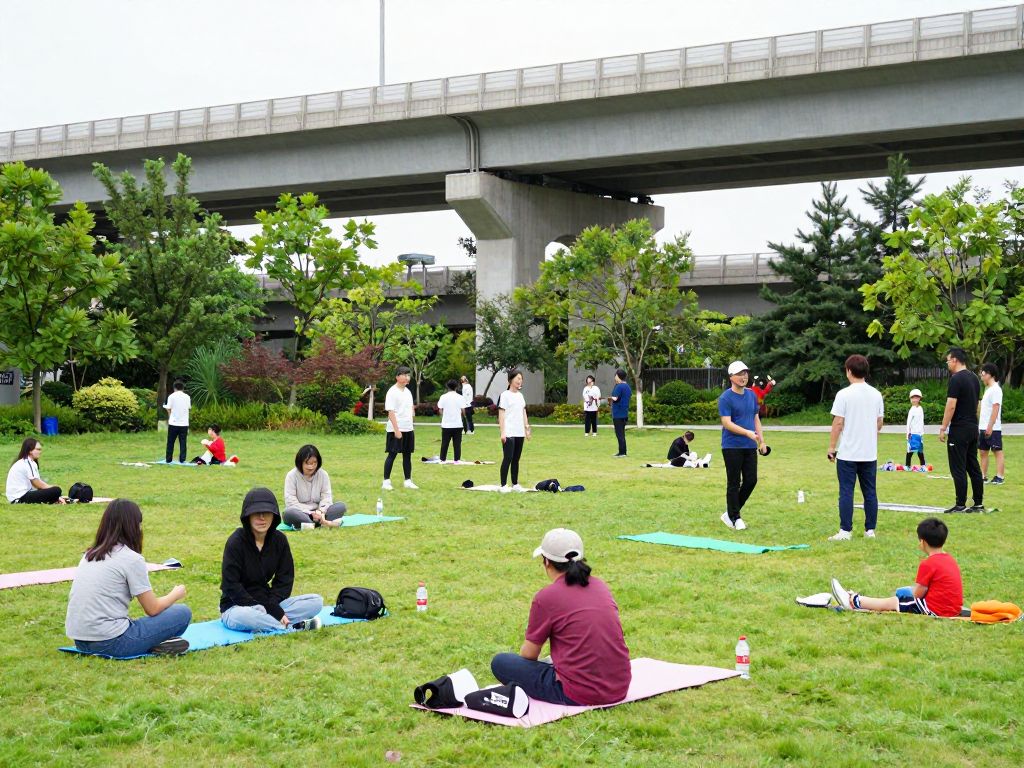
City Walk BHAM stands as a 31-acre linear park, spanning 10 city blocks from 15th Street North to 25th Street North, directly beneath the reconstructed Interstate 59/20 in downtown Birmingham. This expansive public space was conceived as a central gathering place, designed to enhance the quality of life for residents and visitors alike. Its array of features reflects diverse community interests, including pickleball courts, a popular skate park, a pump track, and a dog park. For families, numerous playgrounds offer safe and engaging environments for children, while recreational sports spaces with artificial turf and multi-use fields cater to athletic activities.
Beyond recreation, City Walk BHAM incorporates cultural and social elements such as an amphitheater, performance spaces, and a civil rights story zone, reflecting Birmingham’s rich history and diverse community. Walking trails meander throughout the park, and designated areas for food trucks, market spaces, and even a beer and wine garden provide opportunities for commerce and social interaction. The project provides better pedestrian connections to key downtown attractions, including the Birmingham Civil Rights Institute, Birmingham Museum of Art, Alabama School of Fine Arts, the Birmingham-Jefferson Convention Complex (BJCC), and Protective Stadium. Officially kicking off construction in July 2021 with Brasfield & Gorrie as the contractor, City Walk BHAM opened its doors before The World Games 2022, rapidly becoming a centerpiece of civic life and a point of pride for the Birmingham community. It is recognized as potentially the largest project of its kind in the nation, showcasing Birmingham’s significant achievement in civic innovation.
The Peril: Navigating Funding Challenges
Despite its resounding success and widespread community embrace, City Walk BHAM now faces a critical challenge concerning its long-term financial stability, an issue that threatens the continuity of this vital public asset. The “peril” centers on securing a sustainable funding model for the ongoing maintenance and operation of the 31-acre park. Current estimates indicate that operating City Walk BHAM costs approximately $115,000 to $125,000 per month, translating to an annual expenditure ranging from about $1,380,000 to $1,500,000. While the park generates over $400,000 in operating revenue annually, this amount, though significant, falls short of covering the total costs. It is a common reality that most public spaces do not generate sufficient revenue to become entirely self-sustaining through their operations alone.
This financial gap has led to a notable dispute between the City of Birmingham and Jefferson County regarding responsibility for these crucial expenses. Birmingham Mayor Randall Woodfin advocates for Jefferson County’s financial contribution, citing the county’s significant support for other initiatives managed by the Birmingham-Jefferson Convention Complex (BJCC). Conversely, Jefferson County Commission President Jimmie Stephens maintains that the City of Birmingham should bear the responsibility for spaces located within its municipal boundaries, noting the county’s broader commitment to supporting multiple municipalities. Adding to the complexity, the Alabama Department of Transportation (ALDOT), which funded the construction of City Walk BHAM, had an agreement to reimburse the BJCC for management and operation costs, but this arrangement was capped at $4 million. This cap has now been reached, and ALDOT will not provide additional funds for ongoing operational expenses. This situation highlights the complexities that can arise when large-scale civic projects, though initially well-funded for construction, face challenges in establishing enduring operational support.
Forging a Path Forward Through Local Leadership and Partnership
The financial crossroads facing City Walk BHAM presents a critical opportunity for Birmingham to demonstrate strong local leadership, foster innovative solutions, and deepen civic involvement. The ongoing discussions between local officials, including Mayor Woodfin and President Stephens, and ALDOT, are crucial to resolving the funding shortfall. This dialogue must move beyond simple budgetary allocations to explore models that promote shared ownership and long-term viability for this significant local initiative.
One avenue for resolution lies in creative partnerships involving local government, the private sector, and community organizations. Private entities and philanthropic groups, recognizing City Walk’s immense value to the Birmingham community and its role in attracting tourism and development, could step forward to bridge funding gaps. Furthermore, enhancing user-generated revenue streams through events, sponsorships, or carefully considered fees for certain amenities could supplement existing funds, without burdening everyday citizens. Emphasizing personal initiative, residents and local businesses can actively participate in volunteer programs, adopt-a-park initiatives, or contribute to fundraising efforts, reinforcing the community’s stake in the park’s future.
The City Walk BHAM project, with its genesis in community engagement and public input, particularly evident in the enthusiastic embrace of features like the skate park, showcases the power of local choice in shaping urban spaces. Moving forward, a collaborative approach that prioritizes limited bureaucracy, empowers local decision-making, and encourages a blend of public and private investment will be essential. This proactive stance would not only secure the future of City Walk BHAM but also serve as a model for other civic innovation projects within the Birmingham AL events landscape, ensuring that valuable community assets continue to thrive through collective responsibility and forward-thinking leadership.
A Call to Sustained Engagement for Birmingham’s Future
City Walk BHAM represents a remarkable chapter in Birmingham’s ongoing story of revitalization, transforming neglected urban space into a dynamic hub for activity and connection. Its success, from fostering community engagement to providing vital recreational and cultural amenities, has undeniably enriched the Birmingham community. However, the current financial challenges underscore a critical truth: even the most ingenious civic innovations require sustained commitment and collaborative solutions to endure.
As discussions continue to unfold regarding the long-term funding for City Walk BHAM, it is imperative for all stakeholders – local government, county officials, private enterprises, and individual citizens – to engage proactively. Ensuring the longevity of this vital asset will require a blend of prudent financial planning, creative fundraising strategies, and a steadfast dedication to civic involvement. The future of City Walk BHAM is not just about a park; it is about sustaining a vision for a connected, vibrant, and prosperous Birmingham. We encourage all residents to stay informed, participate in community discussions, and support local initiatives that contribute to the ongoing development and well-being of our city. By working together, Birmingham can overcome these challenges and ensure that City Walk BHAM continues to thrive as a testament to our collective spirit of progress.
Frequently Asked Questions about City Walk BHAM
- What is City Walk BHAM?
- City Walk BHAM is a 31-acre linear park stretching 10 blocks (from 15th Street North to 25th Street North) located under the newly reconstructed Interstate 59/20 in downtown Birmingham, Alabama.
- When was City Walk BHAM developed?
- The project officially kicked off construction on July 1, 2021, and opened before The World Games 2022 in Birmingham.
- What amenities does City Walk BHAM offer?
- It offers a variety of amenities including pickleball courts, a skate park, pump track, dog park, playgrounds, recreational sports spaces with artificial turf, multi-use fields, a challenge course, amphitheater, civil rights story zone, walking trails, food truck areas, performance spaces, outdoor classrooms, market spaces, and a beer and wine garden.
- What challenges does City Walk BHAM currently face?
- City Walk BHAM faces significant funding challenges for its ongoing maintenance and operation, costing approximately $115,000 to $125,000 per month. There is a dispute between the City of Birmingham and Jefferson County over funding responsibility, and the Alabama Department of Transportation (ALDOT) has reached its capped reimbursement for operational expenses.
- What is ALDOT’s role in City Walk BHAM’s funding?
- ALDOT funded the construction of City Walk BHAM and had an agreement to reimburse the BJCC for management and operation costs, capped at $4 million. This cap has been reached, and ALDOT will not provide additional funds for ongoing operational expenses.
Key Features of City Walk BHAM
| Feature | Description | Scope/Impact |
|---|---|---|
| Location | Underneath the I-59/20 interchange in downtown Birmingham. | Local |
| Size | 31 acres, spanning 10 city blocks (15th Street North to 25th Street North). | Local, potentially largest of its type in nation |
| Development Origin | Born from the necessity to reconstruct the I-59/20 highway in 2016. | State-level (ALDOT), Local (Birmingham’s vision) |
| Amenities | Pickleball courts, skate park, dog park, playgrounds, recreational fields, amphitheater, walking trails, food truck areas, performance spaces. | Local |
| Community Connection | Connects neighborhoods and provides pedestrian access to downtown attractions like BJCC and Civil Rights Institute. | Local |
| Operating Cost | Approximately $115,000 to $125,000 per month ($1.38M to $1.5M annually). | Local |
| Funding Challenge | Dispute between the City of Birmingham and Jefferson County over maintenance funding. ALDOT’s $4 million reimbursement cap reached. | Local, State-level (ALDOT) |
Deeper Dive: News & Info About This Topic
HERE Resources
Birmingham Hosts the 55th Annual World of Wheels
Huntsville’s Economic Landscape: Major Wins for Growth
Alabama Community Colleges: Driving Workforce & Economic Growth
Vestavia Hills Unlocks Growth with Cahaba Heights Rezoning
Birmingham’s Business Landscape: Innovation and Growth
United Way Seeks Tutors for Birmingham City Schools
Decline in Enrollment Hits Alabama Public Schools
Alabama Ranked No. 8 in Top States for Doing Business
The BBC Documentary That Missed the Mark: A Closer Look
UAB Unveils New Genomic Medicine and Data Sciences Building

Author: STAFF HERE BIRMINGHAM WRITER
The BIRMINGHAM STAFF WRITER represents the experienced team at HEREBirmingham.com, your go-to source for actionable local news and information in Birmingham, Jefferson County, and beyond. Specializing in "news you can use," we cover essential topics like product reviews for personal and business needs, local business directories, politics, real estate trends, neighborhood insights, and state news affecting the area—with deep expertise drawn from years of dedicated reporting and strong community input, including local press releases and business updates. We deliver top reporting on high-value events such as the Sidewalk Film Festival, Sloss Music & Arts Festival, Magic City Classic, and civil rights commemorations. Our coverage extends to key organizations like the Birmingham Business Alliance and the Birmingham Civil Rights Institute, plus leading businesses in healthcare, finance, and manufacturing that power the local economy such as UAB Medicine, Regions Bank, and Encompass Health. As part of the broader HERE network, including HEREHuntsville.com, we provide comprehensive, credible insights into Alabama's dynamic landscape.