
Birmingham, Alabama, January 27, 2026
Birmingham residents are actively shaping the design of the Civil Rights Crossroads Corridor, which aims to honor the city’s rich legacy while enhancing connectivity and accessibility. With significant community engagement and a substantial federal grant, the project plans to revitalize key neighborhoods and promote a healthier urban environment through multimodal transportation. This initiative exemplifies Birmingham’s commitment to progressive urban development and civic innovation, ensuring local voices are at the forefront of its growth.
Birmingham, Alabama –
Shaping Birmingham’s Future: Civil Rights Crossroads Design Unveiled
Birmingham residents have played a pivotal role in shaping the innovative design concepts for the Civil Rights Crossroads Corridor, a testament to the power of local initiative and civic engagement in community development. This transformative project aims to honor the city’s profound legacy while fostering new opportunities for connectivity and growth.
The unveiling of the Birmingham Civil Rights Crossroads Design Concepts marks a significant stride for the city, showcasing how collective community vision can translate into tangible civic innovation. By actively involving hundreds of residents in the planning stages during 2025, Birmingham has demonstrated a commitment to localized decision-making, ensuring that the project reflects the genuine needs and aspirations of its neighborhoods. This collaborative approach underscores the effectiveness of limited bureaucracy, allowing direct community input to accelerate the formulation of a comprehensive and resonant plan for enhancing urban spaces. Birmingham AL community engagement has been central to this initiative, proving that when citizens are empowered, remarkable progress can be achieved.
A Vision for Connectivity and Legacy
The Birmingham Civil Rights Crossroads Project is designed to commemorate the enduring legacy of the western areas that played a crucial role in the Civil Rights Movement. The project aims to connect these historically significant neighborhoods to downtown Birmingham through a revitalized corridor. This vision extends beyond mere infrastructure, seeking to foster a healthier community by creating new connections to public transit, employment opportunities, green spaces, and vital public health resources. The initiative will specifically honor and revitalize the Smithfield neighborhood, the west side of Birmingham, and the historic Civil Rights District.
Empowering Citizen Input: From Voice to Vision
The development of the Civil Rights Crossroads Corridor design concepts was significantly shaped by hundreds of Birmingham residents in 2025, demonstrating a powerful example of direct civic involvement. The city actively invited the public to review its proposals and contribute their insights through surveys. This extensive public engagement process culminated in a “Community Studio Week,” held from June 10-14 at Legion Field. During this week, residents participated in public meetings, presentations, and discussions, along with open design studios that facilitated one-on-one engagement and feedback sessions. These invaluable interactions provided the design team with concept sketches, data summaries, and survey results, ensuring that the community’s voice was integrated into the project’s foundation. A public launch event at Pepper Place further underscored the importance of community connection, linking the project to the national Celebrate Trails Day movement.
Innovative Infrastructure and Enhanced Accessibility
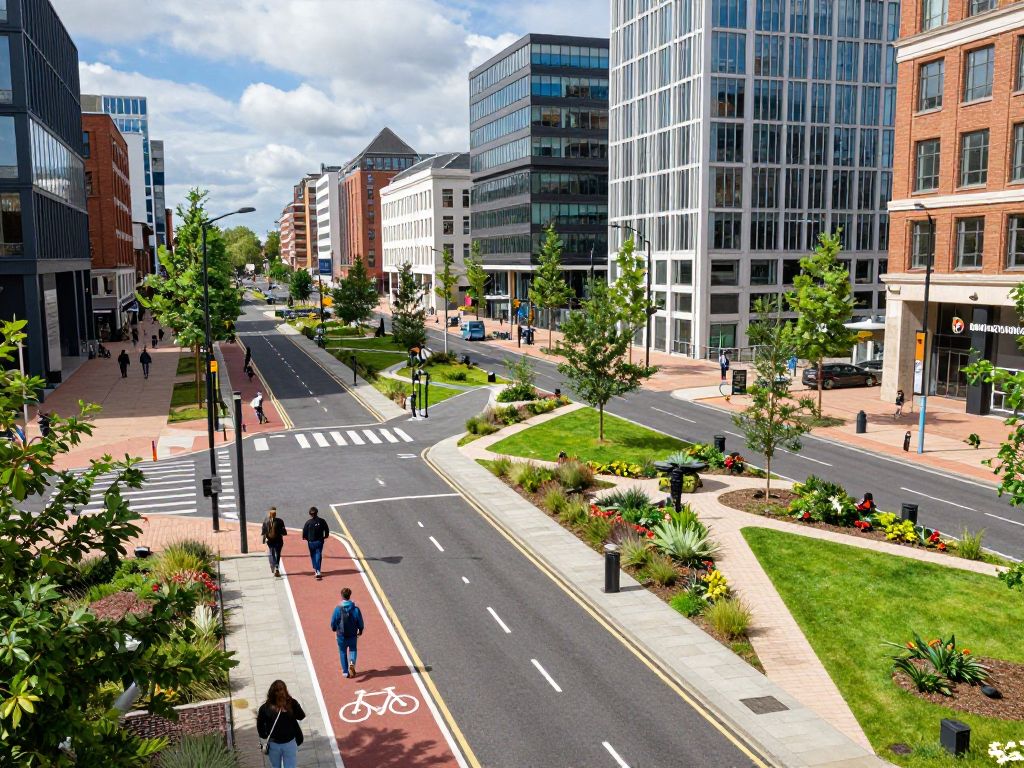
The project encompasses 3.16 miles of multimodal improvements aimed at transforming the corridor. These enhancements include new streetscapes, sidewalks, dedicated bicycle lanes, and urban trails, alongside the establishment of mobility hubs. A key feature of the design involves the inclusion of a two-way cycle track, improved Americans with Disabilities Act (ADA) access, and other universal design elements to ensure usability for all residents. This initiative marks a significant development for Birmingham, as it will establish the first-ever trail connection between the Red Rock Trail System, the Smithfield Community, and the Civil Rights National Monument Site to the downtown core. The corridor is strategically focused on key thoroughfares such as 4th and 5th Avenues North, 16th Street North, 6th Street West, and Graymont Avenue, aiming to make Birmingham more walkable, bikeable, and generally more livable.
Strategic Funding and Collaborative Partnerships
The realization of the Civil Rights Crossroads Project is significantly bolstered by a substantial financial commitment. The City of Birmingham was awarded a $21,681,306 grant from the U.S. Department of Transportation’s Rebuilding American Infrastructure with Sustainability and Equity (RAISE) Grant Program. This critical federal funding, formally accepted by the city in February 2024, underscores the project’s national significance and potential impact. Such partnerships between local government and federal agencies are vital for advancing large-scale civic projects, enabling the city to pursue ambitious goals for community revitalization and connectivity.
Broader Civic Innovation in Birmingham
The Civil Rights Crossroads Project stands as part of a broader commitment to civic innovation and community growth across Birmingham. The Birmingham Innovation Team, participating in a nationwide initiative, is actively working to create cleaner, more resilient, and economically thriving communities, with a current focus on North Birmingham to address energy costs, home repairs, tree planting, and sustainable infrastructure. Furthermore, the Department of Innovation and Economic Opportunity (IEO) spearheads various initiatives such as BOLD, which invests in community-driven programs to support small businesses, and RISE, an innovative funding program designed to help local businesses grow through cash incentives and revolving loans. The city also hosts a Small Business Week, bringing together leaders and stakeholders to celebrate entrepreneurship. Complementing these efforts is the Northwest Downtown Development Plan, an 18-month community-based process aimed at guiding investment and development in the Civil Rights District and the Switch Innovation District, ensuring equitable growth. Another significant development includes a $14,556,040 grant to redesign the Historic 4th Avenue Black Business District, converting 15 blocks from one-way to two-way streets to reconnect downtown neighborhoods and businesses. These ongoing projects demonstrate Birmingham’s dedication to integrated community development and leveraging various resources for the betterment of its residents, enhancing Birmingham AL events and opportunities.
A Path Forward for Birmingham
The Birmingham Civil Rights Crossroads Design Concepts exemplify how strong local leadership, coupled with active citizen participation, can drive meaningful change. By honoring its historical foundations while proactively planning for future growth, Birmingham is forging a path towards a more connected, accessible, and vibrant future. The project’s emphasis on multimodal transportation, green spaces, and community well-being reflects a forward-thinking approach to urban development. Residents are encouraged to stay engaged in these ongoing initiatives, contributing their voices and efforts to ensure Birmingham continues to thrive as a beacon of progress and community achievement. Such sustained involvement is key to maximizing the benefits of these Alabama AL gatherings and projects.
Frequently Asked Questions about the Birmingham Civil Rights Crossroads Project
What is the primary goal of the Birmingham Civil Rights Crossroads Project?
The primary goal is to commemorate the legacy of the western areas in the Civil Rights Movement by connecting them to downtown Birmingham with a renewed corridor. It also aims to foster a healthier community with new connections to public transit, employment opportunities, green spaces, and public health resources, while honoring and revitalizing the Smithfield neighborhood, the west side of Birmingham, and the Civil Rights District.
What type of improvements are planned for the corridor?
The project includes 3.16 miles of multimodal improvements such as streetscapes, sidewalks, bicycle lanes, trails, and mobility hubs. It will also feature a two-way cycle track, improved ADA access, and other universal design elements.
How was the community involved in shaping the design concepts?
Hundreds of Birmingham residents helped shape the future of the Civil Rights Crossroads Corridor in 2025. This included public surveys and a “Community Studio Week” from June 10-14 at Legion Field, which featured public meetings, presentations, discussions, open design studios, and a report-back session to share concept sketches, data summaries, and survey results.
What is the funding source for this project?
The project is backed in part by a $21,681,306 U.S. Department of Transportation RAISE Grant, which the City of Birmingham formally accepted in February 2024.
When is the project expected to be completed?
The city was in the planning stages in May 2025 and expected to start work in 2026, with completion set for near the end of 2027.
Key Features of the Birmingham Civil Rights Crossroads Project
| Feature | Description |
|---|---|
| Project Length | 3.16 miles of improvements |
| Corridor Location | Downtown Birmingham westward through Smithfield and Graymont, focusing on 4th and 5th Avenues North, 16th Street North, 6th Street West, and Graymont Avenue. |
| Key Improvements | Streetscapes, sidewalks, bicycle lanes, trails, mobility hubs, two-way cycle track, improved ADA access, and other universal design elements. |
| Funding | $21,681,306 U.S. Department of Transportation RAISE Grant. |
| Community Engagement | Public surveys, “Community Studio Week” (June 10-14, Legion Field) with meetings, presentations, discussions, and open design studios. |
| Projected Completion | Near the end of 2027. |
| Unique Connection | First-ever trail connection between the Red Rock Trail System, the Smithfield Community, and the Civil Rights National Monument Site to downtown. |
Deeper Dive: News & Info About This Topic
HERE Resources
Birmingham’s Visionary City Walk Faces Pivotal Funding Crossroads
Birmingham Civil Rights Institute Faces Funding Cuts
Nationwide Protests Erupt After Istanbul Mayor’s Arrest
Birmingham’s Historical Narrative Comes to Life in New Documentary
Birmingham Mayor Opposes Trump’s Executive Orders on DEI
Birmingham Civil Rights Institute Celebrates Leadership Change and Honors Local Education Pioneer
Frustration Grows as Birmingham Faces Surge in Violence

Author: STAFF HERE BIRMINGHAM WRITER
The BIRMINGHAM STAFF WRITER represents the experienced team at HEREBirmingham.com, your go-to source for actionable local news and information in Birmingham, Jefferson County, and beyond. Specializing in "news you can use," we cover essential topics like product reviews for personal and business needs, local business directories, politics, real estate trends, neighborhood insights, and state news affecting the area—with deep expertise drawn from years of dedicated reporting and strong community input, including local press releases and business updates. We deliver top reporting on high-value events such as the Sidewalk Film Festival, Sloss Music & Arts Festival, Magic City Classic, and civil rights commemorations. Our coverage extends to key organizations like the Birmingham Business Alliance and the Birmingham Civil Rights Institute, plus leading businesses in healthcare, finance, and manufacturing that power the local economy such as UAB Medicine, Regions Bank, and Encompass Health. As part of the broader HERE network, including HEREHuntsville.com, we provide comprehensive, credible insights into Alabama's dynamic landscape.