
Birmingham, Alabama, August 7, 2025
News Summary
Restoration efforts are in full swing for the historic Prince Hall Masonic Temple in Birmingham, Alabama, a key site for the African American community. Originally built in 1922 by Robert R. Taylor, the building symbolized Black entrepreneurship and social activity. Now, a $30 million restoration aims to revive its historical significance and provide modern community resources, emphasizing local support for its success.
Birmingham Restoration Efforts Underway for Historic Prince Hall Masonic Temple
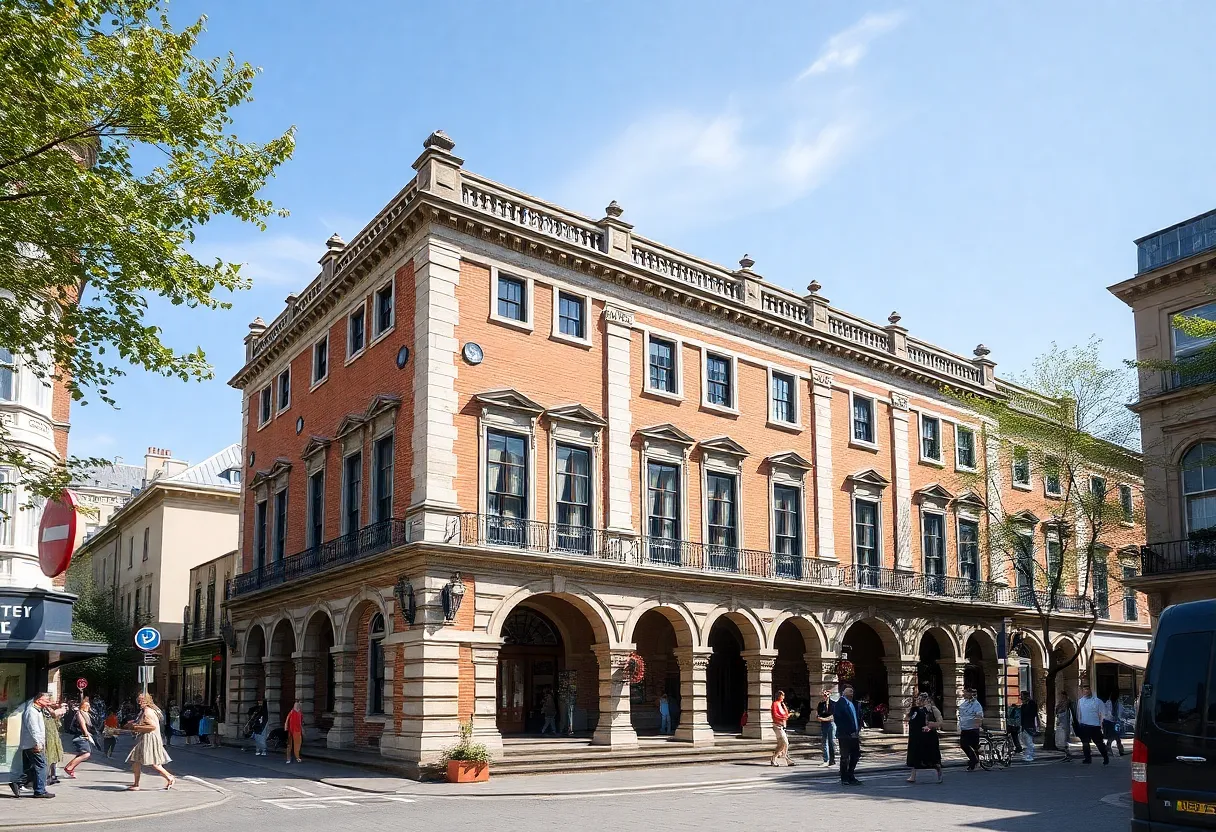
The Prince Hall Masonic Temple, an iconic eight-story structure located in Birmingham, Alabama’s Civil Rights District, is set for a significant restoration. Originally constructed in 1922 by Robert R. Taylor, America’s first licensed Black architect, the building holds immense historical and cultural importance, particularly within Birmingham’s African American community.
The temple was initially established for the Most Worshipful Prince Hall Grand Lodge of the Free and Accepted Masons of Alabama and played a vital role as a social and business hub for Black professionals. It was home to notable organizations, including the National Association for the Advancement of Colored People (NAACP) and the Booker T. Washington Library, which was the first library in Birmingham to welcome the Black community. Additionally, the temple provided essential services such as dental and medical offices, drug stores, and a bowling alley, all of which served to bridge gaps in access to resources that were often denied to Black residents throughout the city.
The Prince Hall Masonic Temple closed in 2011 due to an economic downturn, which marked a significant loss for the community. In response to this, a renewed effort to restore the building is currently underway, with plans to bring it back as a cornerstone of Black enterprise and community engagement. The restoration is projected to cost more than $30 million, which represents a stark contrast to the original construction cost of $658,000 funded by the Black community of the time.
Efforts to rehabilitate the building include plans to create retail, office, and event spaces that honor its historical significance while promoting community businesses. Recent summits have attracted preservationists, city leaders, and advocates who are committed to revitalizing this historic structure. Local support has been emphasized as crucial for the restoration’s success, ensuring that the project aligns with the community’s desire to maintain the cultural and historical legacy of the temple.
Kwesi Daniels, the head of the architecture department at Tuskegee University, has underlined the need to preserve the building’s history and the importance of educating the community about its legacy. The Prince Hall Masonic Temple is emblematic of Birmingham’s Fourth Avenue Business District, historically recognized as the city’s Black Wall Street, where legendary musicians such as Dizzy Gillespie and Duke Ellington performed in the grand ballroom, which has the capacity to seat up to 2,000 attendees.
Throughout history, the temple has served as a critical gathering place and commercial center for Birmingham’s African American community, especially during the period of segregation. The current restoration plans are aimed not only at preserving this landmark but also at providing the contemporary community with resources and spaces that honor its rich past. Fundraising initiatives are already in motion to secure the necessary financial support for the building’s restoration and preservation efforts.
As the project develops, there is a robust desire among community members to uphold the legacy of the Masonic Temple as a symbol of Black excellence and entrepreneurship in Birmingham.
Key Features of the Prince Hall Masonic Temple
| Feature | Details |
|---|---|
| Architect | Robert R. Taylor |
| Construction Year | 1922 |
| Restoration Cost Estimate | Over $30 million |
| Original Construction Cost | $658,000 |
| Seating Capacity of Ballroom | Up to 2,000 attendees |
| Notable Organizations Housed | NAACP, Booker T. Washington Library |
FAQ
What is the Prince Hall Masonic Temple?
The Prince Hall Masonic Temple is an eight-story building in Birmingham, Alabama, constructed in 1922 by Robert R. Taylor, America’s first licensed Black architect. It served as a social and business center for the Black community.
Why is the restoration of the temple important?
The restoration aims to revitalize a vital piece of Black history in Birmingham while providing community resources and spaces that honor its legacy as a hub for Black enterprise and activity.
How much will the restoration cost?
The estimate for the restoration exceeds $30 million, significantly more than the original construction cost of $658,000.
What was housed in the temple historically?
Historically, the temple housed several important organizations, including the NAACP and the first library to welcome the Black community in Birmingham, as well as various professional offices and services.
What events occurred at the Prince Hall Masonic Temple?
The grand ballroom has hosted performances from numerous legendary musicians, including Dizzy Gillespie and Duke Ellington, making it a site of significant cultural importance.
Deeper Dive: News & Info About This Topic
HERE Resources
Birmingham Hosts Historic Preservation Summit
Additional Resources
- Birmingham Times: Masonic Temple Future
- Wikipedia: Prince Hall Freemasonry
- WVTM13: Restoration Efforts
- Google Search: Prince Hall Masonic Temple Birmingham
- Bham Now: Masonic Temple Renovation
- Encyclopedia Britannica: Masonry
- Alabama News Center: Masonic Temple Life
- Google News: Birmingham Masonic Temple Restoration
- ABC3340: Prince Hall Mason Restoration
- Google Scholar: Prince Hall Masonic Temple Birmingham


Author: STAFF HERE BIRMINGHAM WRITER
The BIRMINGHAM STAFF WRITER represents the experienced team at HEREBirmingham.com, your go-to source for actionable local news and information in Birmingham, Jefferson County, and beyond. Specializing in "news you can use," we cover essential topics like product reviews for personal and business needs, local business directories, politics, real estate trends, neighborhood insights, and state news affecting the area—with deep expertise drawn from years of dedicated reporting and strong community input, including local press releases and business updates. We deliver top reporting on high-value events such as the Sidewalk Film Festival, Sloss Music & Arts Festival, Magic City Classic, and civil rights commemorations. Our coverage extends to key organizations like the Birmingham Business Alliance and the Birmingham Civil Rights Institute, plus leading businesses in healthcare, finance, and manufacturing that power the local economy such as UAB Medicine, Regions Bank, and Encompass Health. As part of the broader HERE network, including HEREHuntsville.com, we provide comprehensive, credible insights into Alabama's dynamic landscape.